Ander Mendiguren
2026-11-23
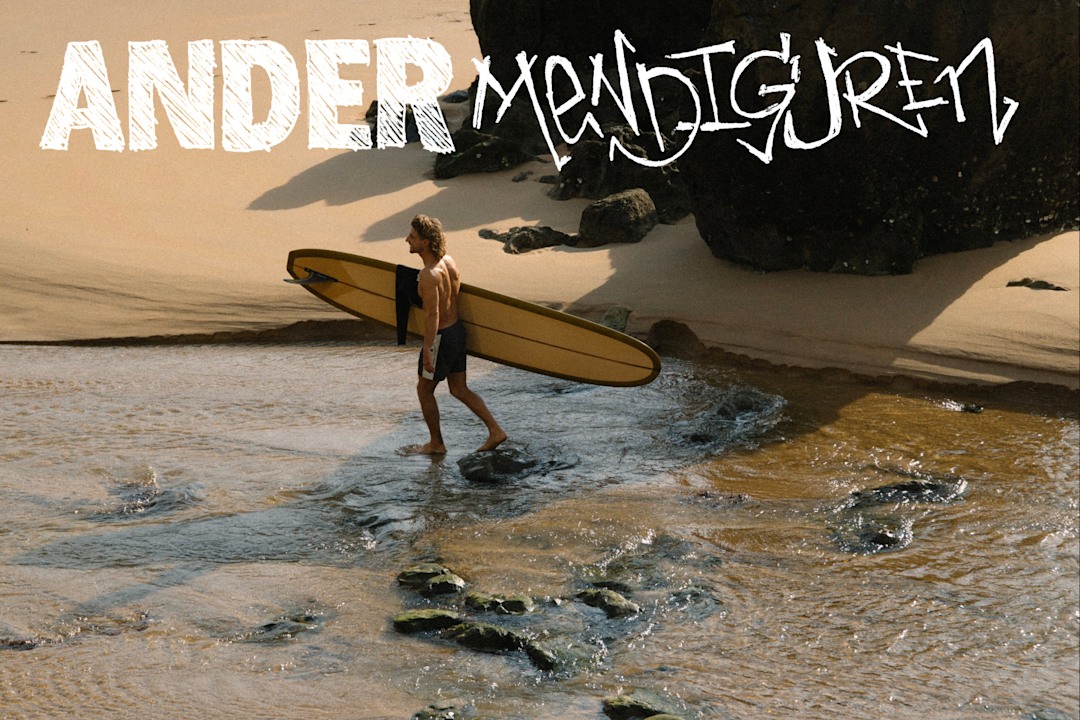
Raised between Bilbao and a quiet patch of countryside close to the sea, Ander’s relationship with surfing started at a young age. He started competing at 12, but the pressure of the contest circuit never quite clicked. After studying sociology and suffering a serious foot injury that kept him off a shortboard and out of the water for almost three years, he found a different way into the water: bigger boards, alternative shapes and a more playful approach to surfing. Now based near Bilbao, with a PhD in social anthropology behind him and the Basque coast on his doorstep, Ander moves between longboards, twins, quads and narrow thrusters - there for the experimentation rather than results. Fresh from winning the Twin Fin Open, and temporarily sidelined by a fractured kneecap we gave Ander a call to talk home, travel, boards, creativity and finding the fun in every session.
For those of us that don’t know you, introduce yourself!
My name is Ander Mendiguren. I was born in Bilbao and grew up in a very small town close to the sea, in the countryside, with no neighbours. My parents found this amazing place and, when they bought the land, there was no electricity or anything, so they had to work on everything themselves. I was really lucky to grow up there. I started surfing when I was around eight and competing when I was 12.
Talk us through your journey in surfing, and that transition from contests to free surfing.
kept competing while I was studying, including on the European Junior Tour, but I never got particularly good results. I got really nervous and never properly enjoyed competing at a high level. After that I started studying sociology. When I finished my degree, I had a really bad injury to my back foot. I thought I might never surf again and was out of the water for about a year. After that, I couldn’t ride a shortboard for almost three years. I had to move onto bigger boards because the foot position is flatter. I started enjoying that process and it opened up a much more open-minded way of understanding surfing. Something clicked and I began to understand better what I wanted to do with it. The support and interest from people around Vans Europe helped me surf a bit more, although I never really expected to make a living from surfing.
You also completed a PhD. Where are you based now?
.I did a PhD in social anthropology. By then I had pretty much given up on the idea of making a living from surfing. Being able to surf more now feels like a bonus — a chance to have more fun in life. I’m based in Urduliz, a small town near Bilbao, mainly because my partner, Esti, is a doctor working in the Emergency Department at the local hospital (a large healthcare centre serving the wider area). We’re also very close to the ocean, so it’s perfect.
You mentioned you had just been injured. What happened?
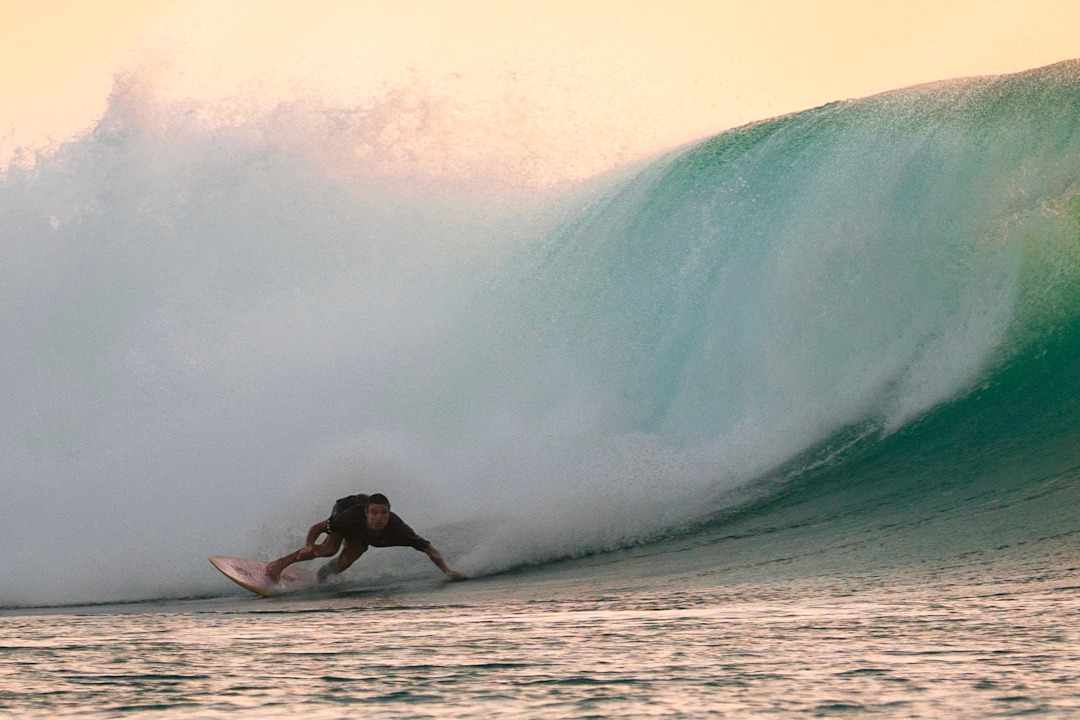
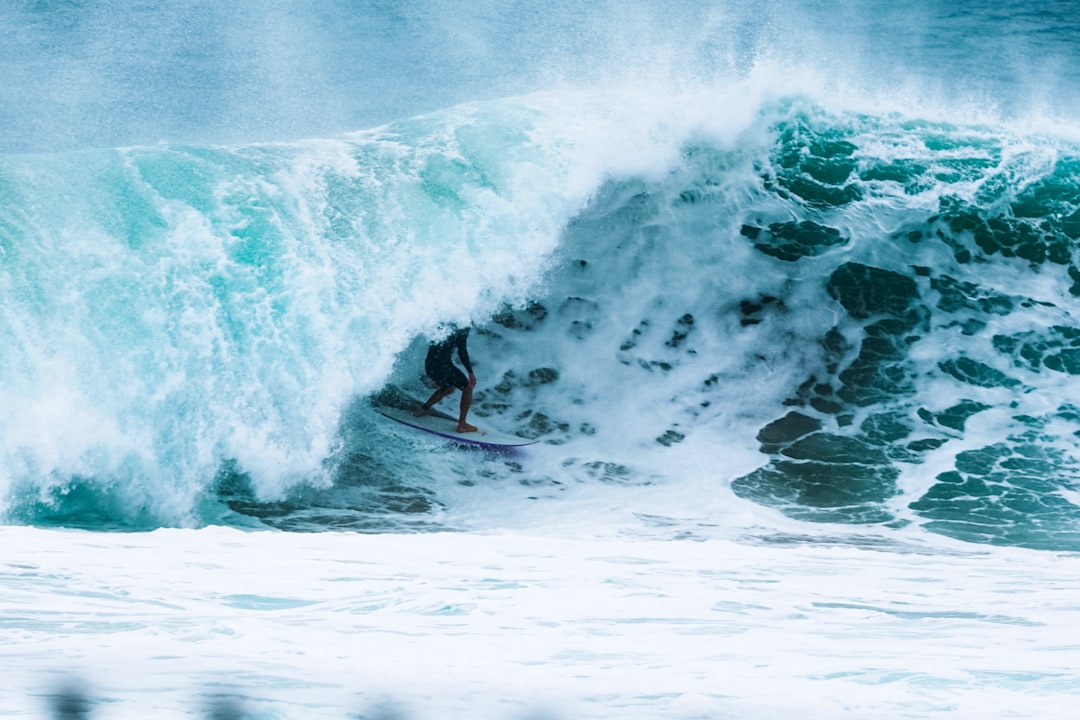
It was during an amazing week at Mundaka, when the first proper swell arrived. It was really crowded and the vibe wasn’t always the best, but I got a few fun waves. The last day was really good. I got a little wave, went into a small barrel and then, during the wipeout in the whitewater, my board hit my kneecap. At first I thought it was just a cut. I knew it needed stitches, but I wanted to stay, so I surfed for another couple of hours before getting it checked. The next day we found out the kneecap was fractured. It should mean about a month of rest.
Coming off your win at the Twin Fin Open, against some of the most talented surfers in the world, how did that feel?
It was a really fun week, with really good waves, and it was great to hang out with everyone. I didn’t expect to win at all. I felt like other surfers — Chippa, Ian, Clay, Eli, Brendon, Kepa, Greyson and plenty of others — were surfing better and pushing hard. I don’t know why they picked me, but they did. We had some really fun waves at Mundaka during the event and, because it wasn’t crowded, everyone could enjoy the surf. It was a good time. It also says a lot about the hard work that goes into making an event like that happen.
Zarautz hasn’t had a major contest in a while. How was it having so much talent in town?
Zarautz has always had a lot of talent, from the established locals to the younger kids coming through. There might not have been a proper big event for a while, but there have always been really good surfers around. During the event, it was great to surf heats alongside surfers I really admire, both local and international. It was also fantastic to see young local surfers getting the opportunity to take part, using boards lent by the invited surfers and making the most of the experience with some incredible surfing. Everyone was putting on a show.
For such a small town, Zarautz is home to an unreal amount of amazing surfers. Why do you think that is?
I think it’s partly because it’s a beach town, really close to the sea, and the quality of life is high, so people are very connected to the ocean and have more time to surf. There’s also a rich history of amazing surfers there that drives the next generation as well as great waves in the area, from Hossegor to Mundaka so maybe that’s the magic mixture!
How would you describe the Basque Country to someone who has never been?
It’s really beautiful. The quality of life is great, people are generally nice, and we have an amazing gastronomic culture. Compared to other parts of the world, we’re very lucky to have a great public healthcare system and a solid public education system. The winter can be a bit cold — there are a couple of months I’d happily avoid and spend somewhere warmer — but I really like it. The more I travel, the more I appreciate home. I feel grateful to have been raised here and to live here.
What do you think makes the Basque Country culturally distinct, beyond surfing?
It has a long history, like many parts of Europe, but the Basque language and culture are particularly important. There has been a strong movement to protect that culture and keep traditions going, especially after the way the Spanish dictatorship treated the Basque people. Due to the industrialization process, particularly around the Bilbao metropolitan area from the late 19th century onwards, the Basque Country also developed a strong working-class movement and a long tradition of labour activism.
Bilbao itself is a fascinating city from a historical and sociological perspective. Nowadays, you can still clearly see the social divisions across the city and its surrounding areas, with the river separating wealthier neighbourhoods from traditionally working-class ones. There’s a lot of history behind all of this, far more than I could explain in just a few words.
How would you describe the local surf scene in the Basque Country?
There has traditionally been a strong thruster, high-performance approach, and I think the scene could be quite narrow-minded in that sense. But that’s changing. More people are riding alternative boards and longboards now.
There are some amazing surfers around here — from the Acero brothers and Iker Fuentes to Aritz Aranburu and Hodei Collazo, as well as plenty of lesser-known surfers who were riding alternative shapes long before they became fashionable. The younger generation in the area, led by Yago Domingez, is also ripping and pushing the level really hard. It’s an interesting scene, and I think it’s getting better and more open-minded.
When you travel, which other surf spots around the world hold your attention?
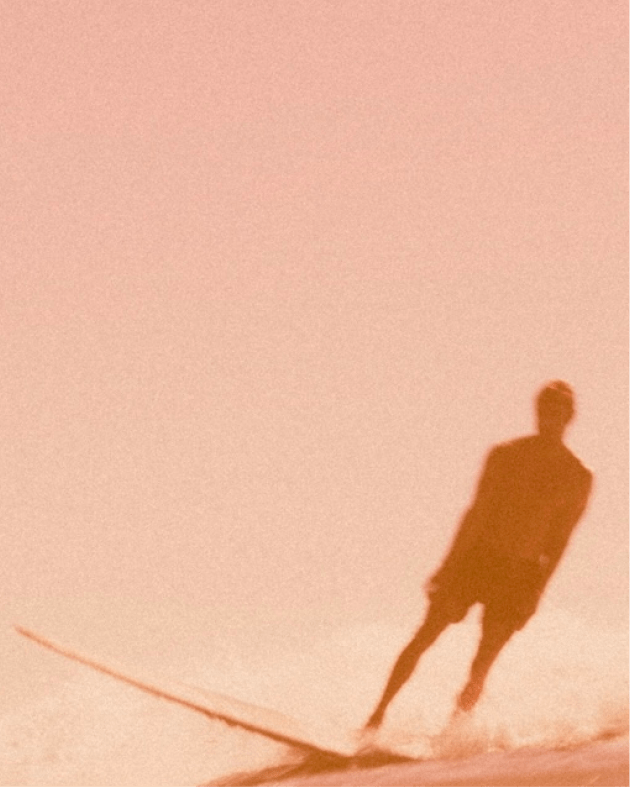
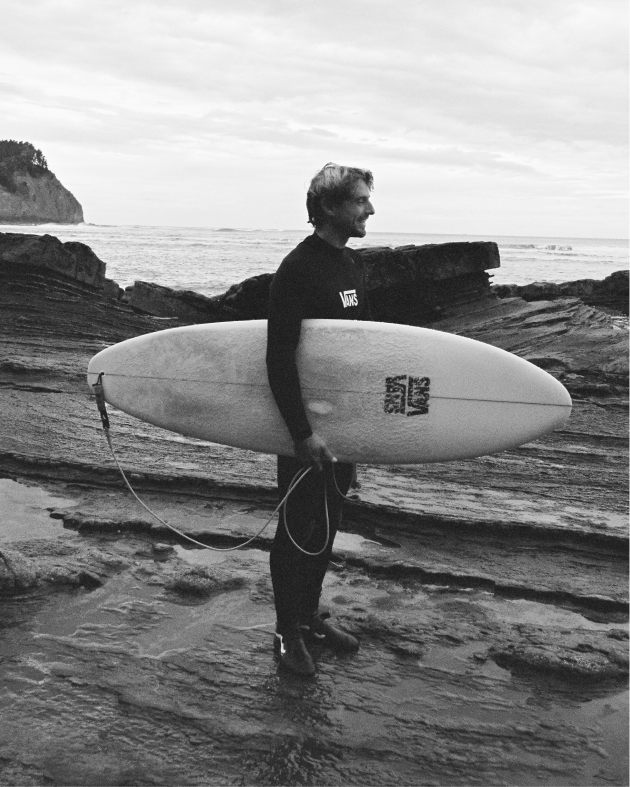
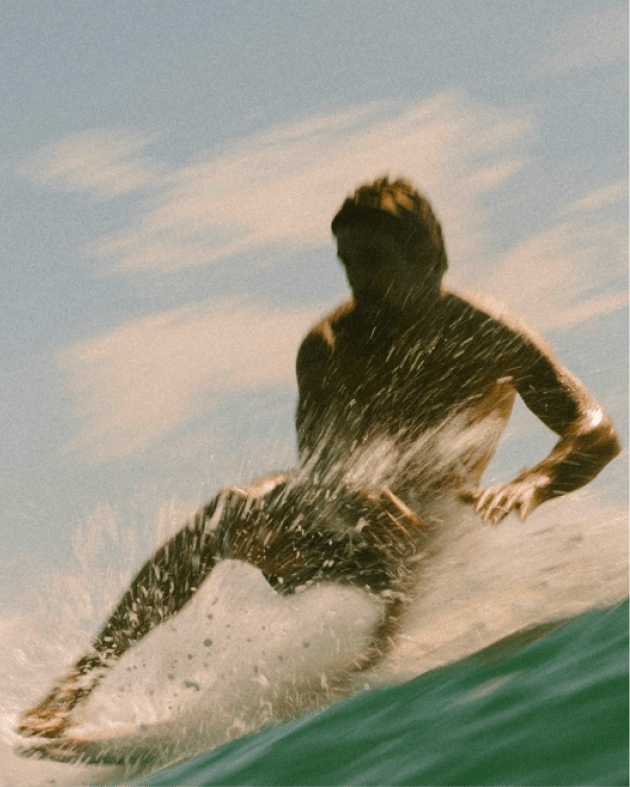
I really enjoyed Pascuales in Mexico. Esti and I spent nine months traveling around Mexico in a van, surfing the Oaxacan pointbreaks and so many different spots along the Pacific Coast. I’d love to go to Hawaii, although I’m not sure I could handle the crowds. I had a lot of fun at G-Land in Indonesia — I think it suits me. I’d also love to surf Jeffreys Bay and Namibia. We’ve mostly travelled for longer periods rather than going from place to place chasing swells like a lot of professional surfers, so there are still so many places I haven’t surfed.
When you’re back from injury, do you have any trips planned?
I might go to Western Sahara, and Ireland is definitely on the list. I’ve been to Ireland before, but I wasn’t feeling at my best when I was there. I want to go back and push my limits a bit. It’s a place where you need to feel prepared, comfortable and 100 percent ready.
Talk us through the boards you’ve been riding recently.
I ride everything — from a 9'7" or 10-foot longboard down to a 5'2", twin fin and even something that’s almost like a bodyboard. I love thrusters too, especially narrow ones. What interests me most now is trying to understand how to connect with each board and with the wave. It’s about experimenting and improving, but not in a competitive way. I want to make surfing more playful and have more fun, working out what my body and my limited skills can do with each board.
How much input do you have into the boards you ride?
I have a really good relationship with the Pukas family. It goes back a long way — my uncles surfed and had a good relationship with the family too. I’m stoked to ride their boards. They’re open to me trying different models, making adjustments and telling them what I want to ride. They’re always open to experimenting. I also have a close friend who shapes under the Adrokultura name and glasses for Pukas, so I get to ride a huge variety of boards. Sometimes it’s hard to choose what to take out because surfing is such a wide activity.
How do you find the transition between longboarding and shortboarding?
Learning to longboard was the hardest transition for me. My background was all thrusters and high-performance surfing, so the way you stand and connect with a longboard is completely different. I felt like such a kook when I was learning, and I still do sometimes, but I enjoy it a lot. Switching between boards is easier now. If it’s three-foot, I’ll often take a longboard and a shortboard down to the beach. Before, when I only rode thrusters, I might have one session and be done if the waves weren’t right. Now I can stay in the water all day, switching between a softboard, longboard, twin fin or thruster. Working out what each one can do keeps me motivated.
You’re proactive about putting edits together. How do you find filming and editing as a creative outlet?
I really enjoy editing. I love music, and I think it’s a very important part of the process. During my PhD, writing was also a creative process, but it could be difficult and the results weren’t always easy to see. Editing feels a bit like putting a puzzle together, but you see the result much faster, which I find rewarding. I’m a bit of a kook when it comes to editing — I don’t know that much and I wish I had more skills — but I have fun with it.
What are your other interests outside of surfing?
I used to do a lot of martial arts, but I stopped after an injury to my foot and then got busy with the PhD. I played rugby when I was younger, so I’ve always enjoyed contact sports. I love reading, although I don’t read as much as I used to. These days I get a lot of pleasure from listening to music, hanging out with friends and going out. I love a party, just not too often…
Who are your role models, in and outside of surfing?
It’s hard to choose because every era has different surfers doing amazing things on different equipment. I’ve always loved Occy, Tom Curren, Joel Tudor and Margo but I find it difficult to say who is the best. Outside of surfing, I have a lot of admiration for people who dedicate their lives to making the world a better place. I really value people whose work is driven by care, solidarity and a sense of responsibility towards others, rather than personal gain or individual success. Surfing can sometimes feel like quite a selfish pursuit, so I have a lot of respect for people who devote their energy to something bigger than themselves.
Favourite Vans shoe?
The black Half Cabs I got recently. They’re the first pair of Half Cabs I’ve owned, and I haven’t really worn anything else. Ever since I got them, I’ve hardly worn anything else. I also love other Vans models, like the Old Skool, Sk8-Hi and Slip-On. I’m pretty easy when it comes to Vans — it’s hard to go wrong!
Any closing remarks? A message to the universe, or to your former self?
I’d tell my younger self not to worry so much. Be tranquilo in life; be more chill. I feel very lucky to have had the father I had, to have my mother, brothers and nieces in my life, and to share my everyday life with Esti. I think that’s what really matters.
As for the universe, the world is in a tough place right now. We need less injustice and selfishness, and more compassion and care for one another. Above all, more peace and fewer wars.
I think the world could use a lot more care and a lot less hate.