Tom Lowe
2026-10-07
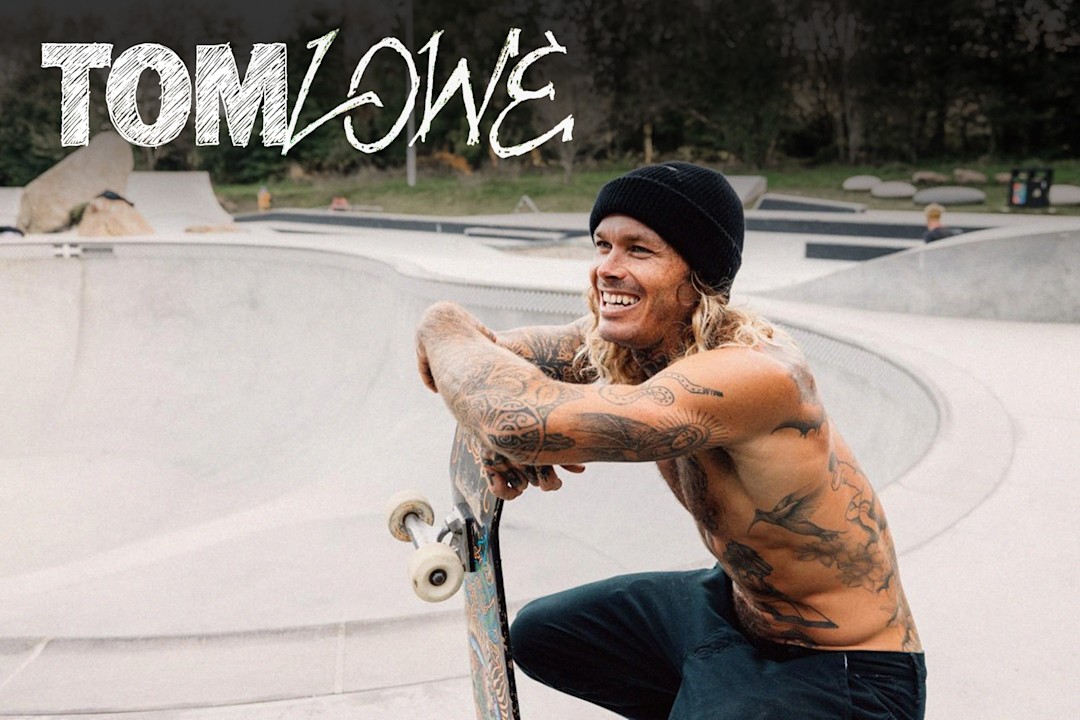
Tom Lowe has been a fixture on the international big wave circuit for well over two decades now. Lowey’s story has never been a straight line, it’s more like a collection of places, people and calls that have shaped Tom into who he is today. Originally hailing from St Ives in Cornwall, a place not known for its big wave culture - for Tom, though, the lack of obvious opportunity was never really a problem. It just meant going about things in a different way. Lowey came to riding waves relatively late, travelling to escape the Cornish winters and gradually building up his surfing to bigger waves. Ireland became a second home, with winters spent chasing slabs around Mullaghmore, Aileens and Riley’s alongside the tight-knit crew that grew around those waves. Tahiti would later become a defining part of Tom’s career, two near-fatal accidents that shifted Tom’s perspective on life.
Now living in Raglan, New Zealand, with his wife and two daughters, Lowe’s life looks very different from the transient existence that defined his twenties. There’s grounding and a much clearer understanding of what actually matters. Having just won the Big Wave Surfer of the Year award, we caught up with Tom to talk Cornwall, Ireland, Tahiti, fatherhood, boards, and what it means to keep chasing swells after you’ve already come close to losing everything.
For those of us that don’t know you — introduce yourself!
My name is Tom Lowe, I was born in Penzance, Cornwall in the UK, and grew up around St Ives. My family and my community are still there, so Cornwall will always feel like home. I’ve built a new family over here in New Zealand now. My wife is Māori, we have two girls, and we’ve finally got a little nest here — our first proper house.
I’ve lived a pretty transient life. Since I was about 16, it was just travel, skate, surf and get out of the dark depths of the Mordor winter that is the UK. Me and my mates would go to Indo, Australia, Mexico, Hawaii — wherever. There was no swell chasing or checking charts. We’d have a couple of hand-me-down boards between us and just go.
I didn’t even properly start standing up until I was about 15. I was mainly a bodyboarder before that, watching all the movies and looking up to the guys around Cornwall. I was a skater first and foremost, really. I wasn’t particularly good, but I loved it. Then I went to Lakey Peak in Indonesia, for the first time and suddenly I was like, I’m surfing. I kept going back for years and that really became the beginning of everything.
So how does a guy from St Ives end up in New Zealand, quite literally the other side of the world… talk us through your journey?
I’ve never really planned things. I put things out into the universe and then I’m open to whatever comes back. If something feels right, if my instincts and my heart are good with it, I go all in.
I met my wife in Puerto Escondido about 11 years ago. We met having breakfast and then suddenly we were going out, travelling around Mexico, eating different food, going up into the mountains — just loving life. I was completely loved up. I had a contest coming up and couldn’t even walk properly, but I didn’t care about the contest. I was already winning in my head because I’d met this girl.
We spent years between Portugal and Cornwall - then New Zealand just evolved naturally. I’d always felt that I probably wouldn’t live in Cornwall forever. Once you have kids, your priorities shift completely. It’s about what’s best for them. New Zealand has the space, the people are lovely, the surf is consistent, and it just felt like a good place for them to grow up. So here we are.
So from the past, cutting to the present, you just won the Big Wave Surfer of the Year. What does that mean to you?
It’s been such a wild journey, I just feel so grateful. It’s still sinking in, I’m still processing it. I mean what can I say - It’s huge honour. A really surreal moment. I’m really overwhelmed with all the love and support from everyone, and so incredibly grateful. I’m buzzing!
Being an English big-wave surfer isn’t always symbiotic. Talk us through that progression.
For me it was a very long, drawn-out process. There was never really a breakthrough moment. It was just years of ups and downs. I’ve always felt like an underdog. I grew up in Cornwall, where you don’t really talk yourself up. If you did, your mates would just rip the piss out of you. You could get a magazine cover or win something and you wouldn’t even tell anyone about it. You just crack on.
I never had much self-belief or confidence, especially in big waves, growing up but I was always keen to give it a crack. However to perform alongside some of these guys was a distant dream in many ways. I’d be sitting out there next to Kai Lenny or Billy Kemper thinking, I’ll let them go that one. I hate hassling, I’m always at the back of the line – it’s just how I operate.
The problem with being from England is that we don’t have a big-wave spot. You go somewhere like Mavericks and nobody knows who you are. You’re just this English bloke who’s turned up. So I felt like I had to work twice as hard. I’d put in proper stints. Six weeks at Mavericks living in a caravan. Three months in Hawaii. Paddling out with the OGs, borrowing boards, watching them and learning. I’d just keep my head down and try to get the heaviest wave I could.
It wasn’t really about proving anything to anyone else. It was about proving something to myself. And even now, I’m still not making a living from surfing in the way people might imagine. You’re hustling, doing side jobs, trying to make it work. You’re doing it because you love it. If you get a few swells, you make them count.
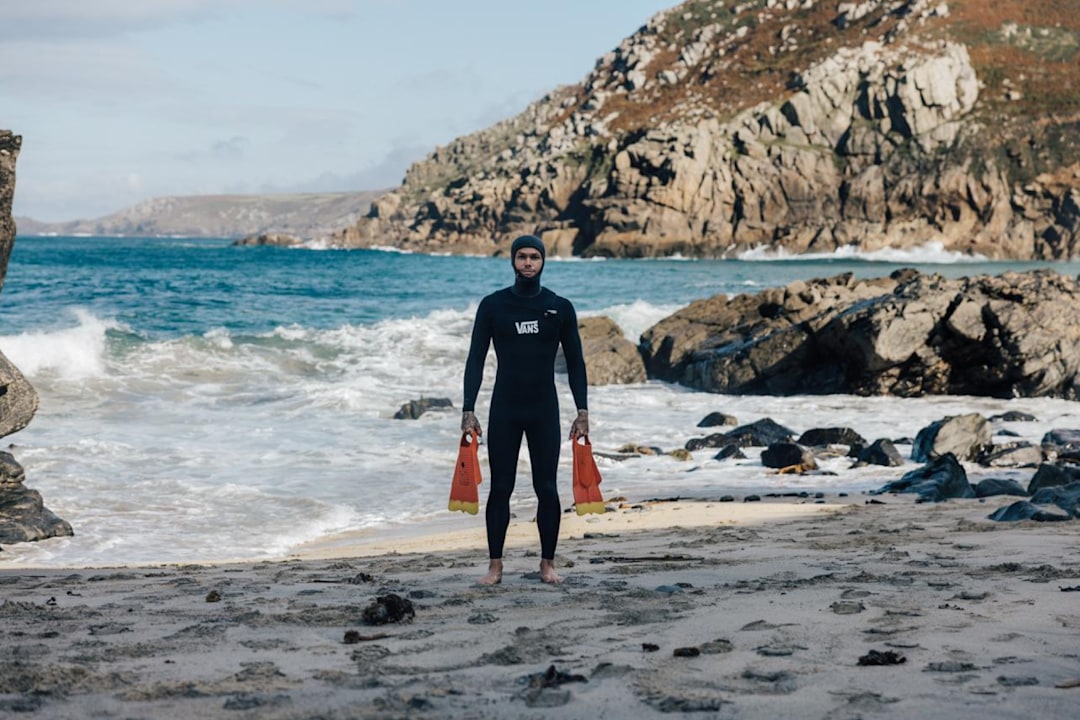
Mullaghmore, Aileens, Riley’s and Ireland in general have always had a special place in your career. Tell us about your relationship with those waves and that community.
Ireland feels very similar to Cornwall to me; raw nature, raw storms, raw power, but with these incredibly kind, strong people. I’ve been going there for more than 20 years now and every year I’m still excited to go back. A lot of our Cornish brethren live over there now, so it feels like another little family.
A lot of that started with Mickey Smith. I met him when I was lifeguarding and I’d seen these pictures that he took of the lads surfing these slabs and these big cliffs, and I thought, I want to go and see that. We drove over with a few mates and it was just a normal surf trip mixed with the heaviest waves I’d ever seen. I was completely blown away. Then Mickey found Riley’s, which is just this beautiful, crazy left slab. I’d never towed before, but I knew how to drive a ski from lifeguarding, so we just figured it out. That first trip led to meeting Fergal, and then I ended up living with Ferg for five winters or so and being based there for ten winters, around and about a little but mostly in County Clare. We got skis, explored around and just started discovering these places.
Mickey’s imagery really helped everything grow. He’d just shoot because he loved it, then send stuff to sponsors because he wanted to get us paid so we didn’t have to go back to Cornwall and work in a rubber factory or dig holes. There were some really miserable days. It was freezing, heavy and brutal. But then you’d get in the water and it would be absolutely firing, and all that disappeared.
Ireland has given me so much. I’ll keep going back until I physically can’t.
Aside from Ireland, what are other waves that you have an affinity to?
The Canary Islands were really special. I lived there for about five years and had a great community around me. I could have seen myself staying there.
Portugal was another big part of my life. I spent nearly ten years around Ericeira, before and after meeting my wife.
Puerto Escondido will always be special because that’s where I met her, but it’s also just an incredibly energetic place. It always seems to treat me well. Hawaii as well, as a family we’ve spent a few long stints there and it’s an incredibly special place that has gifted me some of my best rides.
And then Tahiti, obviously. That place has had a massive impact on me. There isn’t a day that goes by where I don’t think about what happened there. It’s just part of me now. I’ve tried to let it go, but it’s too full-on. At the same time, I look at it as a gift. You grow the most when you’re going through the tragic times. That’s just human nature. So I have to honour it.
So touching on Tahiti, you’ve had two serious accidents surfing out there. Can you talk us through the first one?
The first one was really traumatic. I got sucked over the lip, hit the reef, broke five ribs, punctured my lung and broke my shoulder. Then I had to get myself from the reef into the lagoon and over to the beach. I was by myself and I knew that if I stopped moving, I was going to die.
It was proper survival mode. I think about those mountaineering films where someone is dragging themselves through the snow because they know they have to keep going. You can do some crazy shit when you’re in survival mode. I was in and out of consciousness. Once I got to land, I went into shock and then into these completely different states of consciousness. The helicopter, the hospital, the surgery, the drugs — it was just this crazy 24-hour journey.
I can’t really articulate what happened during that time. It’s like trying to explain something psychedelic that you can’t put into words. When I came back to normal consciousness, I just felt this immense gratitude. I was like, holy shit, I’m lucky. Thank you for letting me be here. My wife was pregnant with our youngest, and then everyone flew over to see me. My travel insurance didn’t cover it and I had this massive hospital bill, but Greg Long messaged me saying, don’t worry about it. We’ve got you.
He set up a GoFundMe and I was overwhelmed by the response. People I knew back home who barely had any money were putting in 20 quid or 100 quid. I wrote to every single person to say thank you. It just made that feeling of gratitude even stronger.
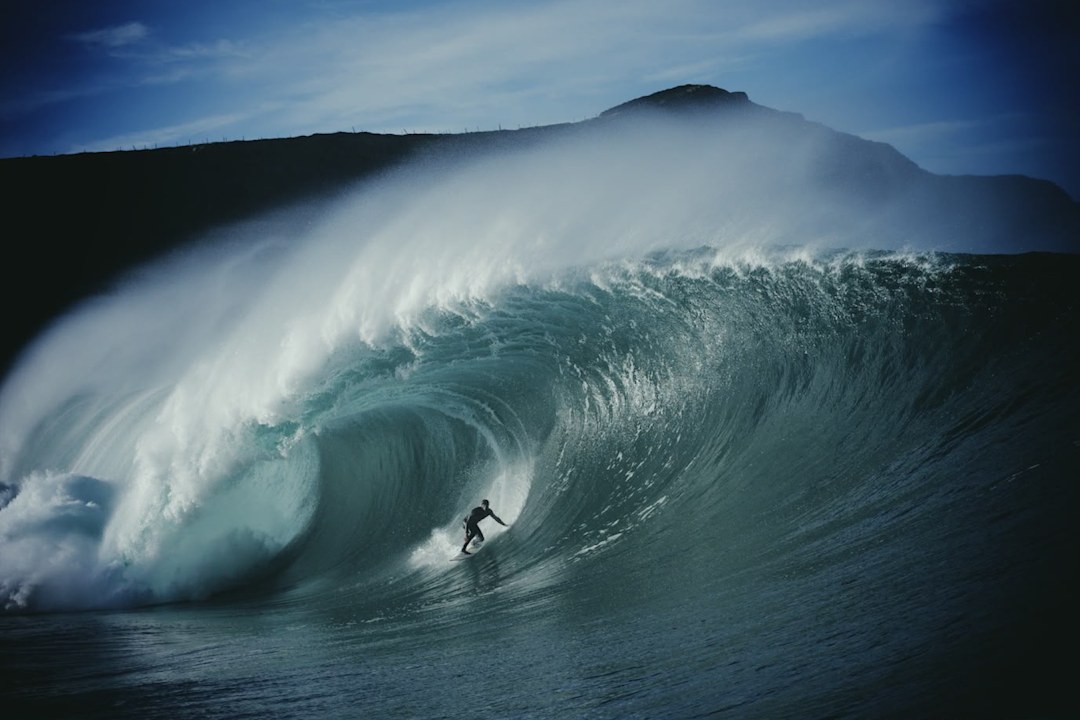
And then you headed back to Tahiti and had the second accident?
Two years later I went back. I’d already had a few good surfs and felt like I was getting comfortable again. I caught this wave, a west one that nobody was looking at because there was a larger set behind it.
I don't really remember the ride. I must have hit the reef hard because I had stitches under my chin, across my cheek and all over my head. I was knocked unconscious and basically became a dead weight being pinballed around the reef. The guys on the boats and skis eventually realised something was wrong. Vatea came in on the ski and found me unconscious, face down in the lagoon. Sage Burke was there too, and between them they got me onto the sled and started CPR. Those two had literally been hugging me five minutes earlier, saying how good it was to see me back.
Then suddenly they were saving my life.
I have these little flashes of memory — Vatea holding me, saying, you got this, brother. Then I remember being in the ambulance and thinking, I’m that guy again. It was a horrible feeling. More than anything, I was disappointed. I’d lost in the biggest way possible. I ended up back in the same hospital, pretty much in the same bed. The same insurance guy came in and said - you again?
I was there for six weeks. Even though I was in Tahiti, staying somewhere beautiful with my family, I couldn’t feel any of it. I was just completely absent.
How do you recover mentally from that?
Slowly.
For the first three months I just tried to live clean. Good food, sleep when I could, breathing, walking, sauna, ice baths. I didn’t take the medication they gave me. That was my decision — I’m not saying that’s right for everyone.
I’d hit these walls where I felt completely ruined and I’d just let myself feel it. You have to go through it rather than run from it. I had insomnia, so I’d go for these really slow, nose-breathing runs that were basically meditation. I’d surf easy waves at Raglan where I could just enjoy being in the water without getting hit on the head.
Then winter came around and I started getting anxious about missing swells. I’d think, I should go, I need to represent, I need to do something for the sponsors. But most of that pressure was coming from me. Everyone around me was telling me to relax. Eventually I went back to Ireland.
I was really tense. I was crying on the way to the surf a couple of times a week. I’d go and sit by myself and just let it happen. Then the waves started giving me these incredible rides. Every session felt like it was giving me something back. I ended up getting the rides of my life.
I don’t really know how that happened. I just know I had to go through it.
How does being a father shape your outlook on big waves?
Before I had my first daughter, I was worried. I’d been a selfish surf dude my whole life. I was used to being on my own schedule and doing whatever I wanted. Then she was born and it just filled me with this love I’d never felt. That year I got the ride of my life at Mullaghmore — a wave I’d been chasing for 15 years. I don’t know if that’s connected, but it felt pretty cosmic.
Having kids changes your perspective. They become number one, so you’re naturally a little gentler with yourself. You don’t need to surf every day. You don’t need to train yourself into the ground. Sometimes you just have to be present with them.
And that takes the pressure off.
I’m still competitive with myself. I want to get a better wave than I’ve ever got. But I’m not really comparing myself to other people. After what happened in Tahiti, even being able to surf big waves again is a win.
How does an average day in New Zealand look?
I’m usually awake around 4:30 or 5. Coffee, train, or get in the water first light. I like to get my hour in early. It’s like this special hour that’s just for me. Then the girls are up and it’s breakfast, school, getting everyone sorted. I take my eldest to school and hang with the youngest while my wife works. We just flow. If the weather’s good, we’re in the sea. We might go to the library, the trampoline park, the hot pools, get hot chocolates, cruise around town.
If it’s pumping, I’ll go surfing in the afternoon. If not, I’ll fire up the sauna. Then it’s dinner, play with the girls, bed around seven or eight, and I’m usually asleep by 8:30.
It’s a simple life, but it’s a lovely one. We work well as a little unit.
Talk us through the boards you’ve been riding?
I ride for Christenson boards. He’s been my shaper for more than twenty years for guns, and I’ve been sponsored by him for ten years which is a huge honour. I’ve got the usual guns and step-ups, but I’ve also been riding some smaller boards recently. I picked up a 5'6" round pin in California that has blown my mind. It’s got so much life in it.
I’ve been loving a Lane Splitter too — a little 5'6" and a 5'8" swallowtail. They’re just fun. Speed, skating around, getting creative. But my go-to forever has been the Long Phish. I’ve never had a bad surf on that board. If I want to take the pressure off and just glide, that’s the one when the waves are small, but when the waves are good, I’ll ride the OP model 80% of the time.
I like big boards. I like the feeling of a long rail under me. I don’t know how it looks, but I like how I feel when I’m surfing it.
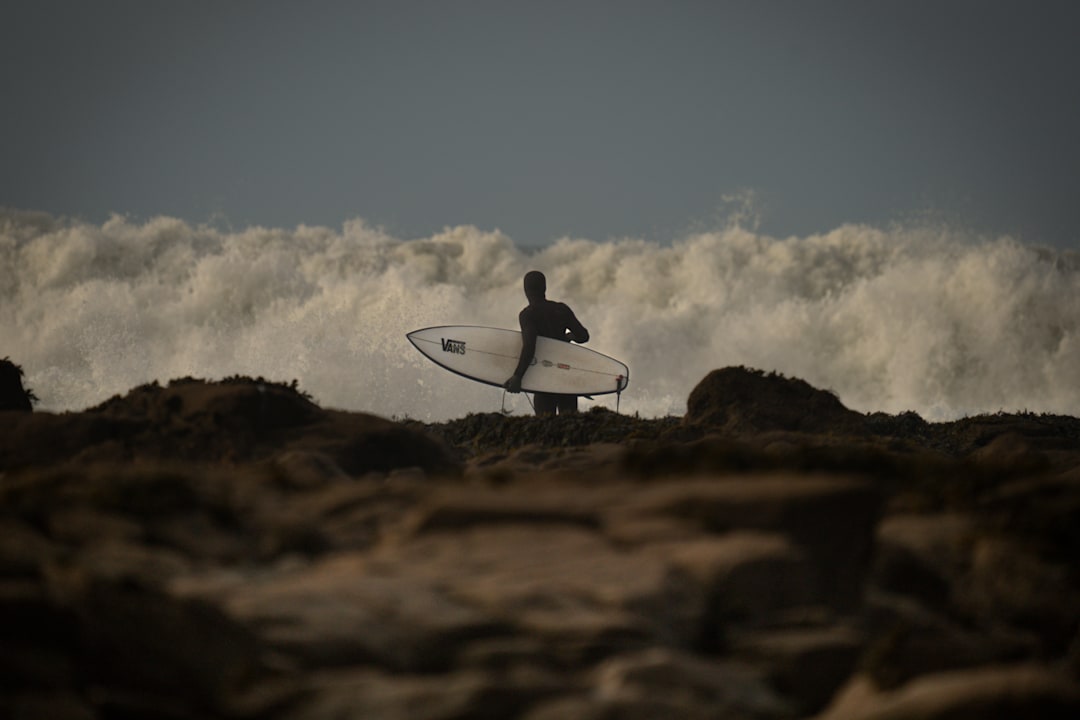
And your recent film, A Thousand Lives?
That’s Mickey. He made it for me as a gift.
We had footage from both accidents and I just told him, I want you to tell the story in some sort of cosmic way. I want complete freedom and I want it as raw as possible. He asked me to send him voice notes about different parts of the story and then he just went away and made it.
When he sent me the first draft, I was down in Puerto, Mexico by myself. I watched it and cried the whole way through. I just said, that’s it. It was so raw. There wasn’t really a formula to it – it was just a feeling.
That sums up Mickey for me. He’s always done things because he cares. He doesn’t ask for anything. He just wants the best for you.
Who are your role models in and outside of surfing?
Mickey is always going to be there. He’s one of the biggest influences on my life.
Danny Fox, the artist too. I can relate to his journey. We’re both a little bit troubled at times, and we’ve both given everything we have to what we do. When I’m going through some tough times, I’ll call Danny because he gets it.
Nate Fletcher is another huge influence. I love his surfing, his style and the way he thinks. He’s eccentric and completely himself. He’s got this energy that just makes you want to express yourself.
My wife is obviously massive. She’s the rock. She was holding everything together while I was dealing with the concussion and everything else. And my kids. They’re my biggest inspiration.
My dad too. I speak to him almost every day. He’s never surfed in his life, but somehow he knows more about surfing than I do. He’s my biggest fan. And of course, my mum, she’s a very spiritual person so we have had this cosmic connection since day one.
What surfers excite you?
Harry Bryant. I love watching Harry surf. He’s a great mate and just a sick surfer.
There are so many young guys doing insane stuff now. The level is fucking crazy. But I’m still drawn to the characters and the people who build themselves up from the bottom.
Maybe I’m just an old man now, but I like a bit of mystery too.
When I was growing up, you’d see a photo or a video part of someone surfing and that was it. You didn’t know what they ate for breakfast or what they did in the gym or what they were thinking every five minutes. They became these mythical characters. Social media has changed that. You can know everything about someone now. I’m not saying that’s bad, but I like it when there’s a bit of mystery left.
What’s next?
I’m trying not to put too much pressure on myself.
There’s all this talk about another big El Niño and I’m thinking, last time that happened it was 60-foot Jaws for six weeks. For the moment, I don’t want to feel like I have to be everywhere. I want to go somewhere because I genuinely want to ride a wave, not because I’m scared of missing out. I’ll always be excited about Ireland. Aileens, Mullaghmore — I love those places. But I think Hawaii and Jaws might be calling me a bit more this winter.
The main goal is just to stay in one piece.
Any last words?
I think the main thing is recognising that we’re not really in control of anything. Anything can change at any point. So appreciate what you’ve got. Be open. Be honest. Be real with the people around you who genuinely want the best for you. Tell your family you love them. And if you’re going through some sh*t, trust me, everyone’s going through some sh*t. Talk it out, talk it over.
These little devices we carry around can make you feel connected while actually isolating you more. Get outside. Connect with nature. Put the phone down. Connect with your community, your people, your family. Because that’s real.